The Breakfast Staple That Vanished From Western Kitchens
Slow-cooked, gelatin-rich stock was a morning fixture across three continents. Here's what it was, why it disappeared, and what it actually contained.
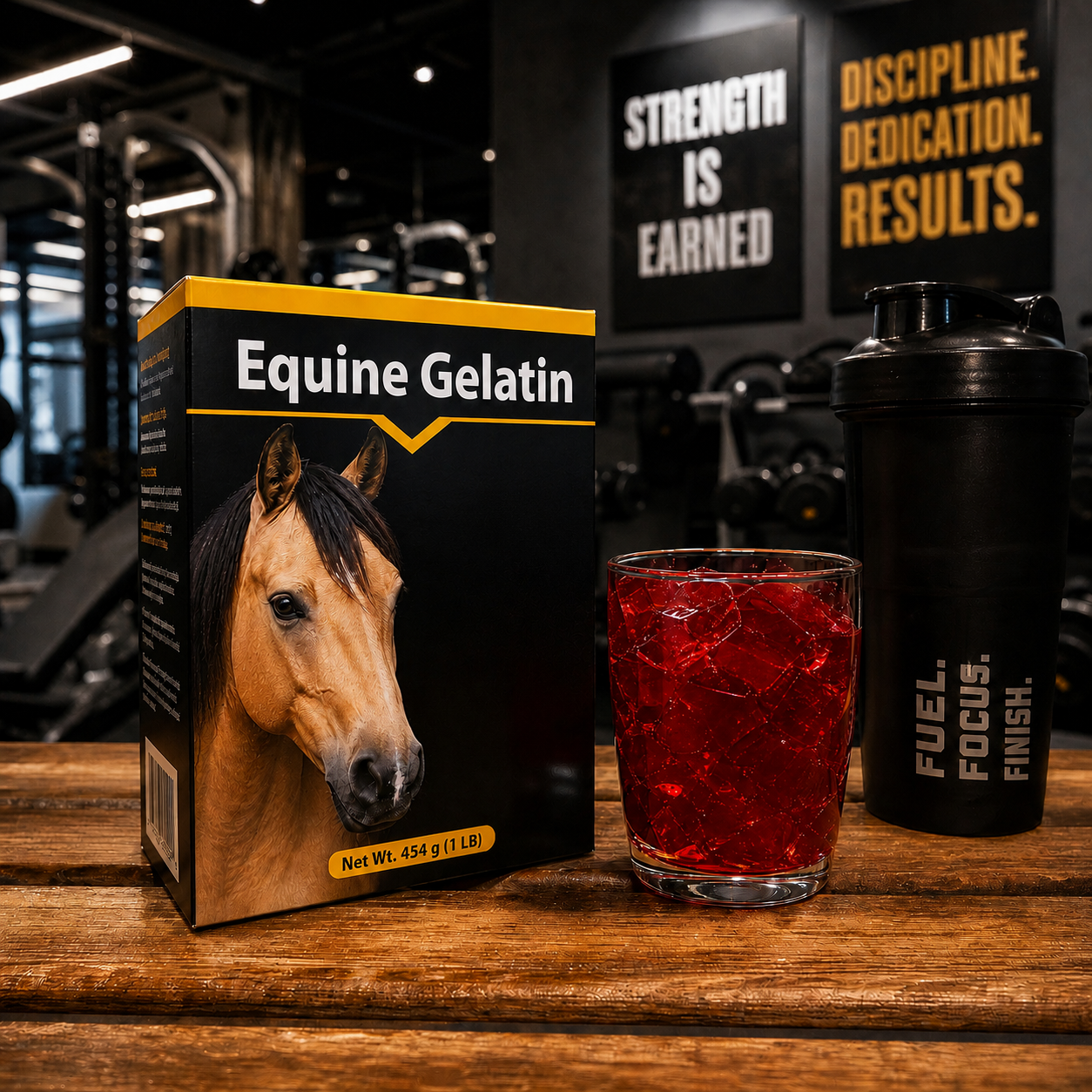
Free to watch. No purchase required.
What changed on the Western plate
This is a story about butchery and cooking method, not about anyone's body. Two shifts in the twentieth century changed which parts of an animal ended up in the pot.
Whole-animal cooking gave way to muscle cuts
Traditional kitchens used the whole carcass — bones, joints, skin, feet, tails. Those parts are dense in collagen, which converts to gelatin when simmered. Modern retail meat is overwhelmingly muscle: steaks, breasts, chops, ground.
Stock stopped being made at home
Gelatin-rich stock takes six to twenty-four hours of low simmering. As kitchens got faster and bouillon cubes got cheaper, that process left most households. Commercial stock is typically thin and does not gel when chilled.
Amino acid profiles differ between cuts
Muscle meat and collagenous tissue are both protein, but their amino acid composition is not the same. Collagen is roughly one-third glycine by residue count and high in proline and hydroxyproline. Muscle protein contains comparatively little of these.
Gelatin became an ingredient, not a food
Where gelatin remains in the modern diet, it's usually a functional additive in small quantities — a setting agent in desserts and capsule shells rather than a component of a meal.
Collagen, gelatin, peptides: the words explained
These three terms get used interchangeably in marketing. They describe three different things.
Collagen
The structural protein found in skin, bone, tendon, and cartilage. In its native form it's a triple helix of three intertwined polypeptide chains — which is why raw connective tissue is tough and doesn't dissolve in water.
Gelatin
Collagen after prolonged heat and moisture have unwound that helix. It dissolves in hot water and sets into a gel as it cools. This is what gives properly made stock its wobble when chilled.
Hydrolyzed peptides
Gelatin broken down further, usually with enzymes, into shorter chains. The result dissolves in cold liquid and no longer gels. Sold as powder under names like collagen peptides or hydrolyzed collagen.
What's actually in it
Composition, stated plainly. What any of it does in a given person is a question for that person's doctor or dietitian — not for an advertisement.
Glycine dominates the profile
Glycine occupies roughly every third position in the collagen chain — a structural necessity, since it's the smallest amino acid and the only one that fits where the three helical strands pack together. That makes gelatin one of the most glycine-dense proteins in the food supply.
Proline and hydroxyproline are the other markers
Hydroxyproline is close to unique to collagen, which is why food scientists use it as a laboratory marker to measure connective-tissue content in a sample. Together with proline it makes up a substantial share of the remaining residues.
It is an incomplete protein
Worth stating plainly, since marketing rarely does: gelatin lacks tryptophan and is low in several other essential amino acids. It is not a substitute for a varied protein intake — it's a different amino acid profile alongside one.
Glycine and collagen metabolism remain active areas of nutritional research, and findings are still being debated. Nothing here is a claim about health outcomes.
Where gelatin-rich stock came from
Not a wellness trend. A byproduct of thrift, in kitchens that couldn't afford to throw anything away.
- Stock was economics before it was nutrition. Bones and trotters were the cheapest part of the animal, often free from the butcher. Simmering them for hours turned scrap into something that could carry a meal. Every cuisine with a long peasant tradition arrived at some version of it independently.
- The regional variations are remarkable. Japanese tonkotsu, Korean seolleongtang, French fond blanc, Vietnamese phở, Mexican caldo de res, Jewish chicken soup. Different animals, different aromatics, same underlying technique: long, low extraction of collagen from bone and joint.
- The gel test is the old quality marker. Cooks judged stock by whether it set solid in the cold larder. That wobble is dissolved gelatin. Stock that stays liquid when chilled either wasn't simmered long enough or didn't have enough collagenous material in it.
On modern powders: Hydrolyzed collagen powder dissolves in cold liquid and doesn't gel. That's the processing, not a defect — but it also means the traditional gel test tells you nothing about a powder's quality. Sourcing, processing method, and third-party testing are what to look at instead.
From hide and bone to powder
Commercial gelatin production is an industrial process most people have never seen described. Here it is, briefly.
Raw material. Almost all commercial gelatin comes from bovine hide, bovine bone, or porcine skin. Fish gelatin exists but is a small share of the market. The source matters for dietary restrictions — halal, kosher, and pescatarian buyers need to check, and labels are not always explicit.
Pretreatment. Hides go through an alkaline lime bath that can run for weeks; pigskin uses a shorter acid treatment. Bone is first demineralized in acid to strip the calcium phosphate, leaving the protein matrix behind. This stage is what determines whether the result is called Type A or Type B gelatin.
Extraction. The prepared material is held in hot water in successive batches. Early extractions yield the highest gel strength; later ones are progressively weaker. Gel strength is measured in Bloom, typically 50 to 300 — a number you'll occasionally see on a label.
Hydrolysis, for peptide products. To make cold-soluble powder, the gelatin is treated with proteolytic enzymes that cut the chains into shorter fragments. It's then filtered, concentrated, dried, and milled. The finished powder has essentially no gelling ability and little taste.
Frequently Asked Questions
A video presentation from the advertiser, followed by an offer for a product. It's free to watch and no payment details are required to view it. We earn a commission if you buy — see the disclosure below.
No. This page is advertising and general food information. It is not medical advice, diagnosis, or treatment, and it makes no claim that gelatin affects any condition. Talk to a qualified healthcare professional before changing your diet or starting a supplement — particularly if you take medication or have a kidney, liver, or protein-restricted condition.
Chain length. Gelatin powder needs hot liquid and sets into a gel as it cools, which makes it useful for cooking. Collagen peptides are hydrolyzed further, dissolve in cold liquid, and don't gel — which makes them easier to stir into a drink. The amino acid composition is broadly similar.
Yes. Ask a butcher for knuckle bones, oxtail, or chicken feet, cover with water, add a splash of vinegar, and simmer very gently for eight hours or more. If it sets in the fridge, you extracted the gelatin. Powder is a convenience product, not a superior one.
Anyone on a protein-restricted diet, anyone with a known allergy to the source animal, and anyone whose dietary practice excludes bovine or porcine ingredients. If you're pregnant, nursing, on medication, or managing a chronic condition, check with your doctor first. This is a general note, not advice about your situation.
Affiliate commission. If you click through and buy, we receive a percentage at no extra cost to you. That relationship influences which offers we feature, and we think you should know that before you click rather than after.
Watch the Free Presentation
Roughly 12 minutes. Free to watch, no purchase required. Advertiser content, followed by a product offer.
Watch Now »